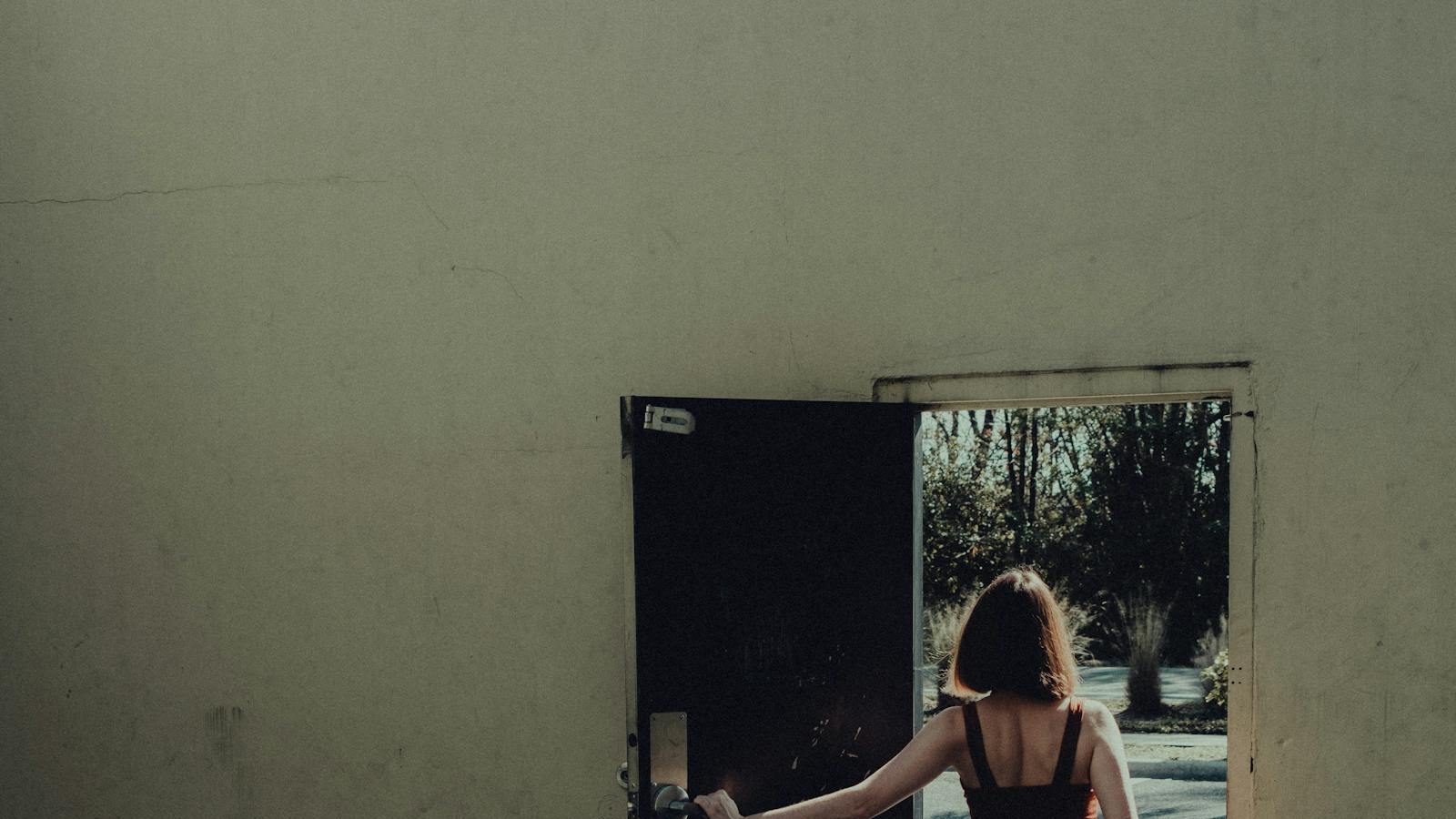
The Woman You're Becoming May Not Look Like Who You've Been
There's a particular kind of disorientation that often arrives in midlife and doesn't fit the language most people have for it.
It's not quite depression. It's not crisis. It's not even unhappiness in any straightforward sense.
It's more like waking up one day and finding that the person you've been — the one who held all of this together, the one who fit into these roles, the one who knew what she was doing and why — has quietly become unfamiliar to you.
Something has loosened. Something is shifting. And the disorientation comes not from breaking down, but from outgrowing.
Before the new version arrives.
What nobody tells you about identity change is that the old self loosens before the new one takes shape.
There's a gap. A period of living between versions. You're no longer entirely who you were — but you haven't yet arrived at who you're becoming. That gap is real, and it can feel profoundly unsettling.
The things that used to anchor you — roles, relationships, routines, the sense that you knew what mattered — may feel less certain. Not because they were wrong, but because you are expanding past them.
Something may not be wrong. Something may be changing.
What outgrowing feels like from the inside.
One of the most common things I hear from women in this stage is some version of: I don't recognize myself anymore.
Often this is said with shame, or confusion, or a quiet fear that something has gone wrong.
But there's another way to read it. What if not recognizing yourself is the first signal that you're becoming someone you haven't met yet?
Identity shift doesn't feel like growth in the moment. It feels like loss. It feels like groundlessness. It can feel like grief — and it often is, in part. You may be grieving a version of yourself you held carefully for decades, along with the relationships and patterns that version built.
That grief deserves to be taken seriously.
And it can coexist with expansion. Grief and becoming are not opposites.
The roles you've held — and what lives beneath them.
Many of the women I work with have spent years, sometimes decades, living primarily in relation to others. As the one who holds things together. The caretaker. The achiever. The one who shows up reliably for everyone else.
These roles are real. They reflect genuine commitment and care. But they can also become so central that the woman underneath them — her actual desires, her honest perceptions, her deeper needs — has had very little room.
Midlife has a way of making that visible.
When the roles don't fit quite as smoothly anymore, when the performance requires more effort and returns less meaning — that is often the first sign that something in you is asking to be reclaimed.
Trusting change before certainty arrives.
The hardest part of this process is that it asks you to tolerate uncertainty before clarity.
To stay with the disorientation long enough to let it tell you something, rather than resolving it quickly into whatever shape feels most familiar. To allow yourself to not know — at least for a time — exactly who you're becoming.
This isn't passivity. It takes real courage.
What I've seen, again and again, is that the women who are willing to stay in that uncertainty — with support, without forcing premature resolution — are the ones who arrive somewhere genuinely new. Somewhere that feels more honest, more like them, more alive.
The woman you're becoming may not look like who you've been.
She may be quieter in some ways, louder in others. She may want different things. She may have shed some of the armor you've been carrying. She may feel unfamiliar for a while.
That doesn't mean you're losing yourself.
It may mean you're finally finding her.
If this resonates, I'd be glad to connect.
This kind of identity work is at the center of what I do — individually, and in The Midlife Shift, a small 6-week experiential group for women in exactly this kind of transition.